
To choose the right moisturizer in Nepal, use lightweight, non-comedogenic lotions with Ceramides and Niacinamide for oily skin. Use richer creams with shea butter for dry winter months.
Choosing a moisturiser in Nepal needs an understanding of your skin type and climate. This guide helps you pick the best hydrating products. For dry skin, read our skincare products for dry skin.
Why Moisturising Matters in Nepal
Nepal challenges skin hydration. Low winter humidity pulls moisture out. Urban pollution weakens the barrier. Kathmandu’s particulate matter often exceeds WHO limits. Barrier-supporting moisturisers are a practical need, not a luxury.
Signs Your Skin Needs a Better Moisturiser
Watch for tightness after washing. Look for flaking or dry patches. A rough texture or deeper fine lines are signals. If skin is greasy but dull, try a lighter formula with barrier ingredients.
Types of Moisturisers Available in Nepal
Lightweight Lotion for Daytime Use
A silky lotion absorbs fast and layers under sunscreen. Look for barrier lipids and humectants. It suits normal to combination skin year round.
Intensive Cream for Dry and Winter Skin
Richer creams have more emollients and occlusives. They prevent water loss. They suit winter, when heating and cold air speed evaporation.
Face and Body Multipurpose Lotions
One lotion for face and body simplifies your routine. Broad ingredient coverage means fewer products and consistent care.
Syndet Bars and Gentle Cleansers for Sensitive Skin
For sensitive skin, a syndet bar with shea butter cleanses without stripping. Follow with a hydrating lotion for full care.
Key Moisturising Ingredients Explained
Ceramides for Barrier Support
Ceramides are lipids in the skin that hold the barrier. Ceramide IIIB supports the moisture barrier and cuts water loss.
Hyaluronic Acid for Hydration
Hyaluronic acid is a humectant. It attracts water and holds up to 1,000 times its weight. It hydrates lotions and serums well.
Niacinamide for Even Tone
Niacinamide (vitamin B3) supports the barrier and evens tone. It pairs well with ceramides and hyaluronic acid.
Shea Butter and Cocoa Butters for Dry Skin
These emollients soften dry skin. They work well in body lotions and intensive creams for elbows, knees, and feet.
How to Layer Moisturiser in Your Routine
Apply to slightly damp skin for better absorption. In the morning, follow with sunscreen. In the evening, it is the final step after treatments. For the body, apply right after showering.
Moisturiser for Different Skin Types in Nepal
Best Moisturiser for Dry Skin
Dry skin needs richer formulas with ceramides, hyaluronic acid, shea butter, and niacinamide. A face-and-body lotion gives consistent hydration.
Best Moisturiser for Oily and Acne-Prone Skin
Use lightweight, non-comedogenic formulas. Gel or silky lotion textures work best. Avoid heavy creams that feel occlusive.
Best Moisturiser for Sensitive Skin
Choose fragrance-free, non-comedogenic moisturisers. Ceramide-rich formulas support comfort all day.
Recommended Product
Lumimoist Intense Moisturizing Lotion
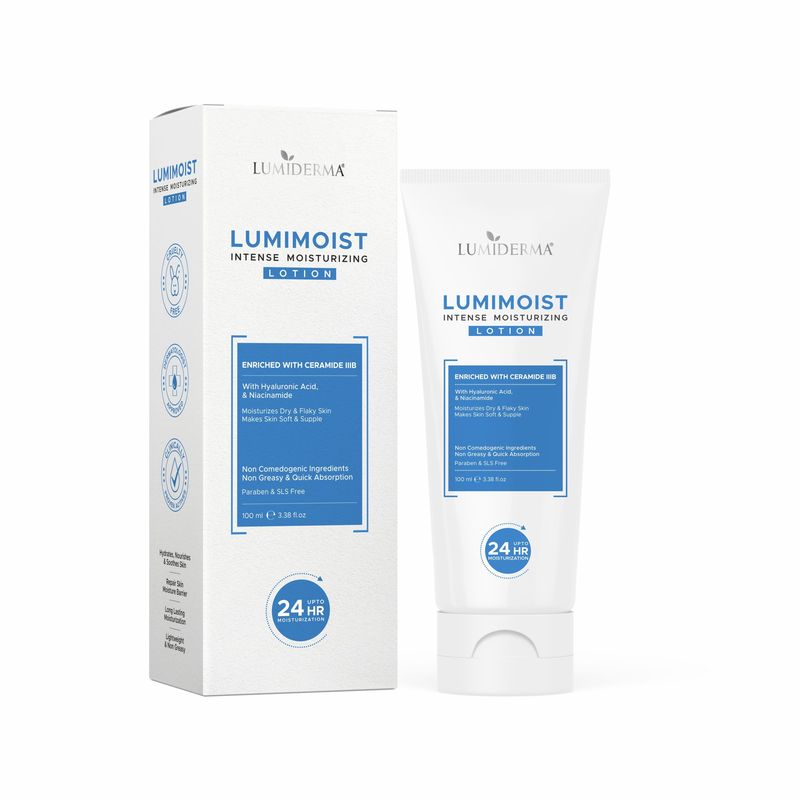
Lumimoist has ceramide IIIB, hyaluronic acid, niacinamide, and shea and cocoa butters. It reduces dryness and supports the barrier. It works on face and body. Shop Lumimoist.
Frequently Asked Questions About Moisturisers
Should I use moisturiser if I have oily skin?
Yes. Oily skin still needs hydration. Skipping it can trigger more oil. Choose a lightweight, oil-free formula.
Can I use the same moisturiser on my face and body?
Many multipurpose lotions are made for both. Check the product description to confirm.
How much moisturiser should I apply?
A pea-sized amount covers the face. For the body, use enough for a thin, even layer.
Disclaimer: This article is for educational purposes and does not replace professional medical advice. If you experience severe scaling, bleeding, or hair loss, consult a board-certified dermatologist.