
Proper sun protection in Nepal means applying broad-spectrum SPF 50 every morning, reapplying every two hours outdoors, and using hats and sunglasses. This matters most at high altitude, where UV rises with elevation.
Sun protection in Nepal deserves attention because of its geography. From high mountain UV to intense lowland sun, protecting your skin is essential for everyone in Nepal.
Understanding UV Risk in Nepal
Nepal gets strong sunlight all year by latitude. Altitude adds more risk. For every 1,000 metres above sea level, UV rises about 10% to 12%. In Namche Bazaar (3,440 metres), UV is roughly 34% higher than at sea level.
UV Index in Major Nepali Cities
Kathmandu Valley hits UV index 8 to 11 at midday. The WHO calls this very high to extreme. Pokhara and hill stations are similar or higher. The Terai gets consistently high UV all year from strong sun.
How to Choose Sunscreen for Nepal
Broad-Spectrum Protection
Sunscreen should block UVA and UVB. UVA drives premature ageing. UVB causes sunburn. Broad-spectrum labels cover both. SPF measures UVB, so seek broad-spectrum too.
SPF Recommendations for Nepal
For daily routines, SPF 30 is enough. For outdoor activity, trekking, or altitude, use SPF 50. Above 3,000 metres, SPF 50 with frequent reapplication is the minimum.
Texture and Finish Preferences
Lotion sunscreens suit dry skin and sit under makeup. Gel sunscreens with a matte finish suit oily skin in humidity. Aqua-gel sunscreens give a water-light feel across skin types.
Sun Protection Beyond Sunscreen
Protective Clothing and Hats
Physical barriers work well. A wide-brimmed hat shields the face, ears, and neck. UPF clothing gives measured protection outdoors.
Sunglasses for UV Eye Protection
Eyes are vulnerable to UV. UV 400 sunglasses block 99% to 100% of UVA and UVB. Wraparound styles block side light, key at altitude where snow reflects UV.
Seeking Shade During Peak Hours
The simplest strategy is less exposure from 10 AM to 4 PM. When outdoors, use trees, umbrellas, or shelters for shade.
How to Apply Sunscreen Effectively
Apply sunscreen 20 to 30 minutes before going out. Use enough: about half a teaspoon for the face and neck, a shot glass for the body. Do not forget ears, neck, feet, and scalp parting.
Reapplication Is Essential
Sunscreen breaks down with water, sweat, and friction. Reapply every two hours and after swimming, sweating, or towelling. Powder sunscreens ease midday reapplication over makeup.
Sun Protection at High Altitude
Trekking needs extra sun awareness. Snow and ice reflect up to 80% of UV, exposing skin from above and below. Apply to all areas, including under the chin and nostrils. Reapply on trek breaks, as sweat wears it off faster.
Protecting Children from Nepal’s Sun
Children’s skin is more UV-sensitive. Keep babies under six months out of direct sun. For older children, use hats, clothing, and shade first, then child-friendly sunscreen. Build sun-safe habits early.
Recommended Product
Spectra 50 Ultra Light Sunscreen Lotion
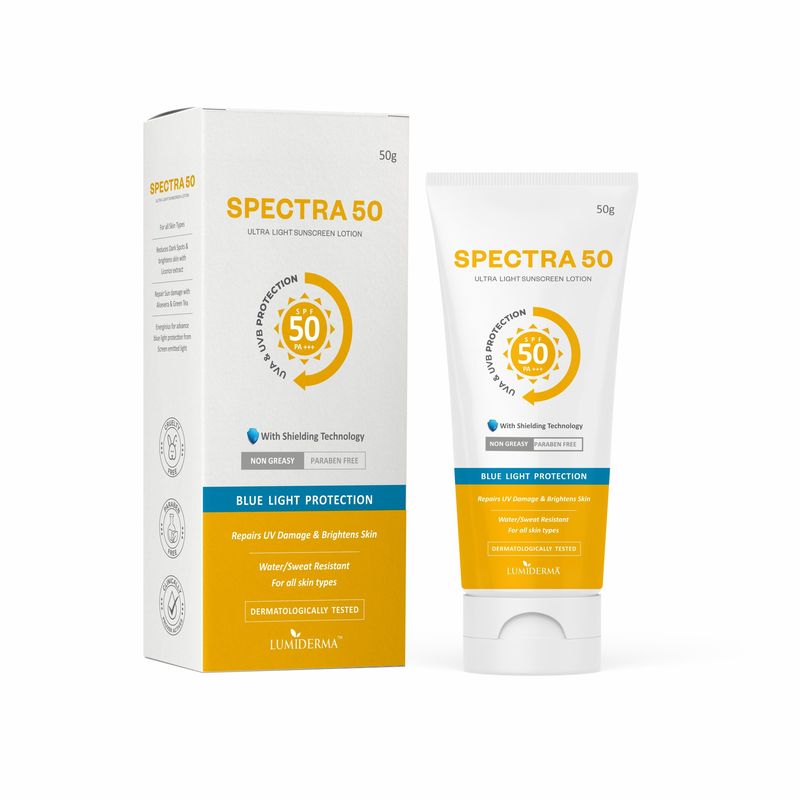
Spectra 50 is an ultra-light SPF 50 lotion for daily Nepal wear. It blends into all skin tones without a greasy finish and defends against UVA, UVB, and blue light. Shop Spectra 50.
Frequently Asked Questions About Sun Protection in Nepal
Can I get sunburned on a cloudy day in Nepal?
Yes. Clouds do not block UV well. You can burn on overcast or foggy days in Kathmandu or Pokhara.
Do I need sunscreen in winter in Nepal?
Yes. Snow reflects UV, and winter sun still delivers strong exposure. Sunscreen should be year-round.
What is the difference between SPF 30 and SPF 50?
SPF 30 blocks about 97% of UVB. SPF 50 blocks about 98%. The difference matters most for long exposure or high altitude.
Disclaimer: This article is for educational purposes and does not replace professional medical advice. If you experience severe scaling, bleeding, or hair loss, consult a board-certified dermatologist.